What is Renewable Energy
Introduction : What is Renewable Energy?
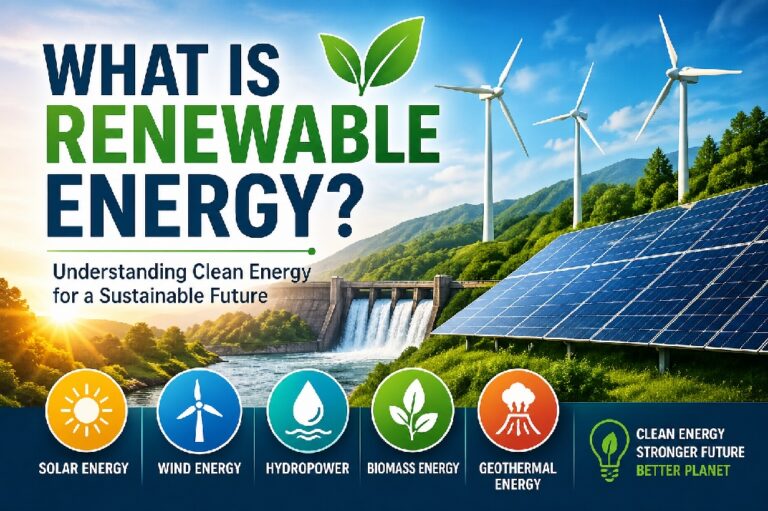
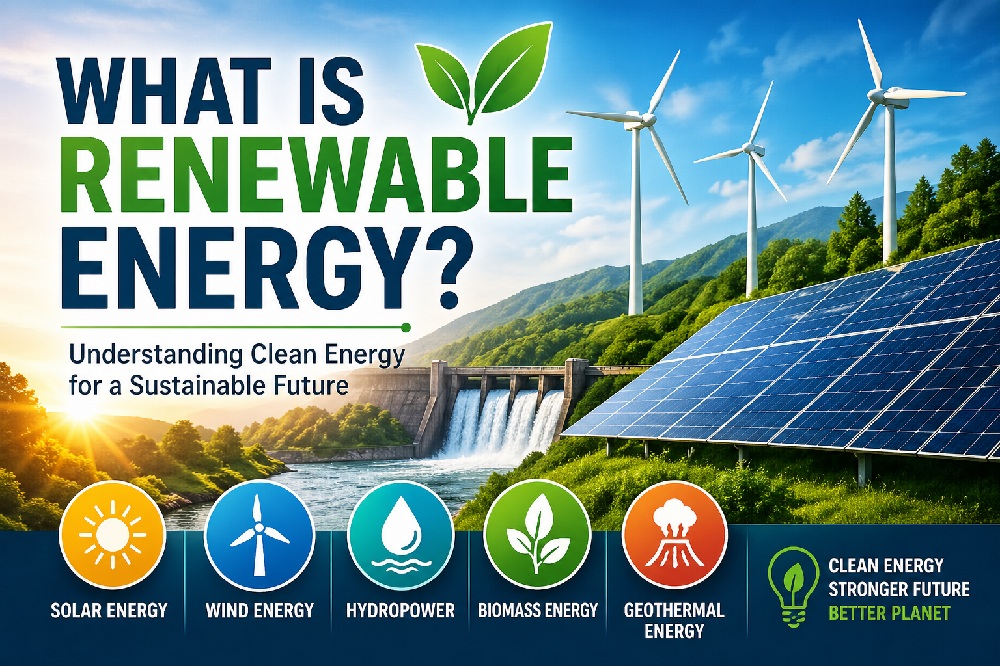
Renewable energy is one of the most important topics in today’s world as nations and individuals look for sustainable solutions to combat climate change and reduce dependence on fossil fuels. In simple terms, renewable energy refers to energy that comes from natural sources that are constantly replenished, such as sunlight, wind, water, and geothermal heat.
Unlike fossil fuels like coal, oil, and natural gas, which take millions of years to form and release harmful emissions when burned, renewable energy sources are clean, abundant, and environmentally friendly.
Understanding Renewable Energy
At its core, renewable energy is derived from natural processes that are continuously renewed. These sources do not run out over time, making them a long-term solution for global energy needs.
Key Characteristics of Renewable Energy:
- Sustainable – It will not deplete over time
- Eco-friendly – Produces little to no greenhouse gases
- Widely available – Found in various forms across the globe
- Cost-effective in the long run – Reduces dependency on expensive fuels
Table of Contents
Types of Renewable Energy
There are several major types of renewable energy, each with its own advantages and applications.
1. Solar Energy
Solar energy is captured from sunlight using solar panels. It is one of the most popular and rapidly growing renewable sources.
- Used for electricity generation and heating
- Works best in sunny regions
- Low maintenance and long-lasting systems
2. Wind Energy
Wind energy is generated using turbines that convert wind movement into electricity.
- Common in coastal and open areas
- Clean and efficient power generation
- Increasingly used in large-scale wind farms
3. Hydropower
Hydropower uses flowing water (rivers, dams) to produce electricity.
- One of the oldest renewable sources
- Highly reliable and consistent energy production
- Can supply power to large populations
4. Geothermal Energy
This energy comes from heat stored beneath the Earth’s surface.
- Used for heating and electricity
- Stable and independent of weather conditions
5. Biomass Energy
Biomass energy is produced from organic materials like plant waste and animal matter.
- Can be converted into biofuels
- Reduces waste while producing energy
Importance of Renewable Energy
Renewable energy plays a critical role in shaping a sustainable future.
1. Reduces Carbon Emissions
2. Energy Security
Countries can reduce reliance on imported fuels by using local renewable resources.
3. Economic Growth
The renewable sector creates jobs in manufacturing, installation, and maintenance.
4. Environmental Protection
It helps preserve natural ecosystems by reducing pollution and resource extraction.
Advantages of Renewable Energy
- Unlimited supply of energy sources
- Lower operating costs after installation
- Improves public health by reducing air pollution
- Supports rural development through local energy projects
Disadvantages of Renewable Energy
Despite its benefits, renewable energy also has some challenges:
- High initial installation costs
- Weather dependency (especially solar and wind)
- Energy storage limitations
- Requires large land areas for certain projects
Future of Renewable Energy
The future of renewable energy looks extremely promising. Governments worldwide are investing heavily in clean energy technologies.
Key Trends:
- Increased use of solar panels and wind farms
- Development of energy storage systems (batteries)
- Growth of electric vehicles powered by clean energy
- Smart grids for efficient energy distribution
Experts predict that renewable energy could supply over 50% of global electricity in the coming decades.
Renewable Energy in Daily Life
Renewable energy is not just for large industries—it can also be used at home.
Examples:
- Installing solar panels on rooftops
- Using solar water heaters
- Supporting green electricity providers
- Reducing energy consumption through efficiency
Bio of Renewable Energy (Conceptual Overview)
- Name: Renewable Energy
- Category: Sustainable Energy Source
- Origin: Natural environmental processes
- Purpose: Provide clean and sustainable power
- Global Usage: Rapidly increasing worldwide
Net Worth of Renewable Energy Industry
The renewable energy sector is one of the fastest-growing industries globally.
- Estimated Market Value: Over $1 trillion globally
- Expected to grow significantly by 2030
- Major investments from governments and private companies
This growth shows how important renewable energy has become in the global economy.
Fun Facts About Renewable Energy
- Solar energy reaches Earth in one hour more than the world uses in a year
- Wind power is one of the fastest-growing energy sources globally
- Hydropower accounts for around 16% of global electricity production
- Some countries already run on almost 100% renewable energy at times
Hobbies Related to Renewable Energy
People interested in renewable energy often engage in related activities:
- Building small solar-powered devices
- Learning about sustainable living practices
- Participating in environmental awareness programs
- DIY projects like solar chargers or wind models
Why Renewable Energy Matters Today
The world is facing serious challenges like climate change, pollution, and resource depletion. Renewable energy offers a practical solution to these problems.
Key Reasons:
- Reduces global warming risks
- Promotes cleaner air and water
- Ensures long-term energy availability
- Supports sustainable development goals
Conclusion
Renewable energy is not just an alternative—it is the future of global energy. With its ability to provide clean, sustainable, and efficient power, it is transforming how we generate and consume energy.
Although there are challenges, advancements in technology and increasing awareness are making renewable energy more accessible than ever. By adopting renewable energy solutions, individuals and nations can contribute to a greener, healthier, and more sustainable planet.
About the Author