What Is Climate Change
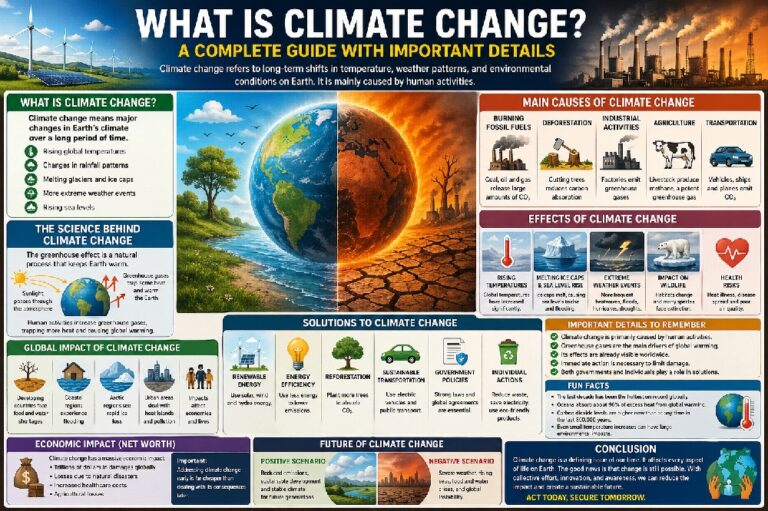
Introduction : What Is Climate Change?
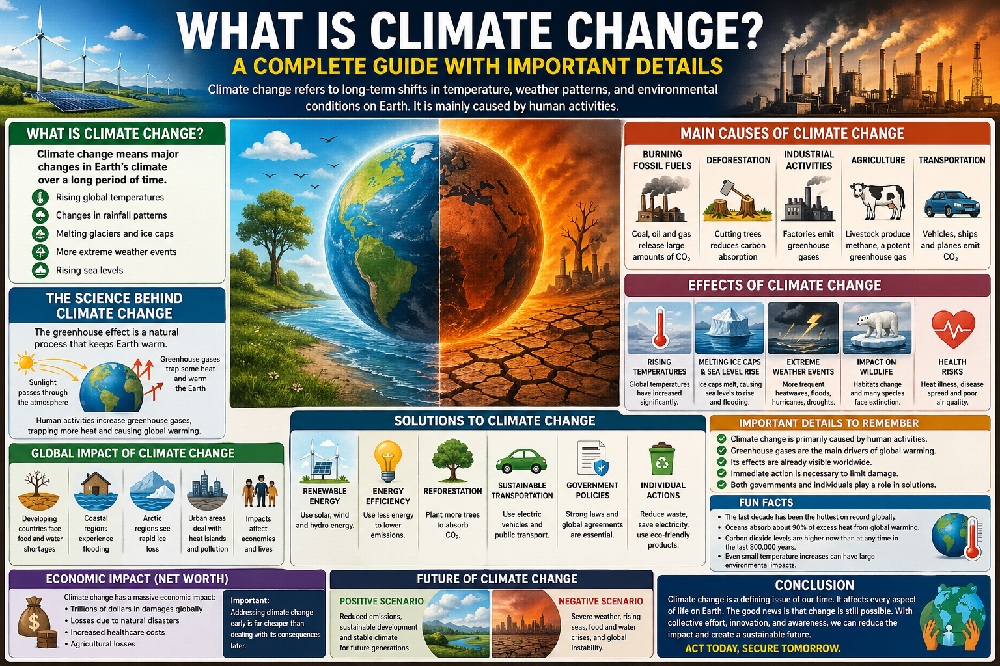
Climate change is one of the most critical global challenges facing humanity today. It refers to long-term shifts in temperature, weather patterns, and environmental conditions on Earth. While climate naturally changes over time, the current phase of climate change is happening much faster due to human activities.
Understanding what climate change is, its causes, impacts, and solutions is essential for individuals, communities, and governments.
Table of Contents
What Is Climate Change?
Climate change refers to significant and lasting changes in Earth’s climate system over decades or longer. These changes include:
- Rising global temperatures
- Changes in rainfall patterns
- Increased frequency of extreme weather events
- Melting glaciers and rising sea levels
The current climate change trend is largely driven by human activities, especially the release of greenhouse gases like carbon dioxide (CO₂), methane (CH₄), and nitrous oxide (N₂O).
The Science Behind Climate Change
At the core of climate change is the greenhouse effect, a natural process that keeps Earth warm enough to support life.
How It Works
- The sun sends energy to Earth
- Earth absorbs some energy and reflects the rest back into space
- Greenhouse gases trap some of this heat in the atmosphere
However, due to human activities, excess greenhouse gases are accumulating, trapping more heat and causing global warming.
Main Causes of Climate Change
1. Burning Fossil Fuels
The use of coal, oil, and natural gas for energy releases large amounts of CO₂.
2. Deforestation
Trees absorb carbon dioxide. Cutting them down reduces this ability and increases carbon levels.
3. Industrial Activities
Factories and industries emit harmful gases that contribute to warming.
4. Agriculture
Livestock farming produces methane, a potent greenhouse gas.
5. Transportation
Cars, airplanes, and ships emit significant amounts of CO₂.
Effects of Climate Change
1. Rising Temperatures
Global temperatures have increased significantly over the past century.
2. Melting Ice Caps
Polar ice caps and glaciers are melting, contributing to rising sea levels.
3. Extreme Weather Events
- Heatwaves
- Floods
- Hurricanes
- Droughts
4. Rising Sea Levels
Coastal areas are at risk due to increasing ocean levels.
5. Impact on Wildlife
Many species face extinction due to changing habitats.
6. Health Risks
Climate change can lead to:
- Heat-related illnesses
- Spread of diseases
- Poor air quality
Global Impact of Climate Change
Climate change affects every region differently:
- Developing countries face food and water shortages
- Coastal regions experience flooding
- Arctic regions see rapid ice loss
- Urban areas deal with heat islands and pollution
Solutions to Climate Change
1. Renewable Energy
Switching to solar, wind, and hydro energy reduces emissions.
2. Energy Efficiency
Using less energy helps lower carbon output.
3. Reforestation
Planting trees helps absorb CO₂.
4. Sustainable Transportation
Electric vehicles and public transport reduce emissions.
5. Government Policies
Regulations and global agreements play a key role.
6. Individual Actions
- Reduce waste
- Save electricity
- Use eco-friendly products
Why Climate Change Matters
Climate change is not just an environmental issue—it is a global economic, social, and political challenge.
It affects:
- Food security
- Water availability
- Human health
- Global stability
Ignoring climate change could lead to severe consequences for future generations.
Bio of Climate Change (Concept Profile)
- Name: Climate Change
- Type: Environmental Phenomenon
- Origin: Natural process accelerated by human activities
- Main Components: Global warming, greenhouse gases, environmental shifts
- Key Drivers: Fossil fuels, deforestation, industrialization
- Current Status: Critical global issue
Net Worth (Economic Impact of Climate Change)
While climate change does not have a traditional net worth, its economic impact is massive:
- Estimated trillions of dollars in damages globally
- Losses due to natural disasters
- Increased healthcare costs
- Agricultural losses
Important Detail: Addressing climate change early is far cheaper than dealing with its consequences later.
Fun Facts About Climate Change
- The last decade has been the hottest on record globally.
- Oceans absorb about 90% of excess heat from global warming.
- Carbon dioxide levels are higher now than at any time in the last 800,000 years.
- Even small temperature increases can have large environmental impacts.
Hobbies (Metaphorical Representation)
If climate change had hobbies, they might include:
- Heating up the planet
- Melting glaciers
- Shifting weather patterns
- Influencing ecosystems
These “hobbies” highlight the widespread impact of climate change on Earth.
Important Details to Remember
- Climate change is primarily caused by human activities.
- Greenhouse gases are the main drivers of global warming.
- Its effects are already visible worldwide.
- Immediate action is necessary to limit damage.
- Both governments and individuals play a role in solutions.
Future of Climate Change
The future depends on actions taken today:
- Positive Scenario: Reduced emissions, stable climate
- Negative Scenario: Severe weather, rising seas, global crises
Scientists warn that limiting global warming to 1.5°C is crucial to avoid the worst impacts.
Conclusion
Climate change is a defining issue of our time. It affects every aspect of life on Earth, from the environment to the economy and human health. Understanding what climate change is helps individuals make informed decisions and contribute to solutions.
The good news is that change is still possible. With collective effort, innovation, and awareness, humanity can reduce the impact and create a sustainable future.
About the Author